

In this issue, we dive into three formats that, while not entirely new, perfectly capture three of today's biggest industry trends. What ties them together is a fascinating common thread: they all explore a 'dark side'—think betrayal, terrible habits, and fear—but deliver it in a thoroughly lighthearted and entertaining way.
WEREWOLVES ON PUBLIC TV
The ‘strange’ (but increasingly strategic) alliances between Disney+ and European linear networks—often public broadcasters—continue to flourish. Following successful partnerships with Spain’s RTVE, Italy’s RAI, ARD and ZDF in Germany, and SIC in Portugal, it is now the turn of Dutch public broadcaster NPO, which has announced its first co-distribution deal for the Dutch version of Wolven: Het Spel van List en Bedrog (Wolves: The Game of Deceit and Betrayal).
This partnership marks a significant shift in strategy for the public broadcaster. Produced by SimpelZodiak (part of Banijay Benelux), Wolven will launch on NPO 1 via BNNVARA on August 29. Crucially, the series will simultaneously be available to stream on NPO Start and Disney+, with new episodes dropping weekly.
The format was created by Fary and Panayotis Pascot, owned by Jaad Productions and Presque Prod, and originally commissioned and broadcast by Canal+ in France (followed by a German adaptation on ARD). It is based on the famous French board game Les Loups-Garous de Thiercelieux (published by Asmodee), which has sold over 7 million copies worldwide. Globally represented by StudioCanal and Dreamspark, the property is part of Banijay Entertainment’s third-party portfolio, with the group driving adaptations across its international footprint.
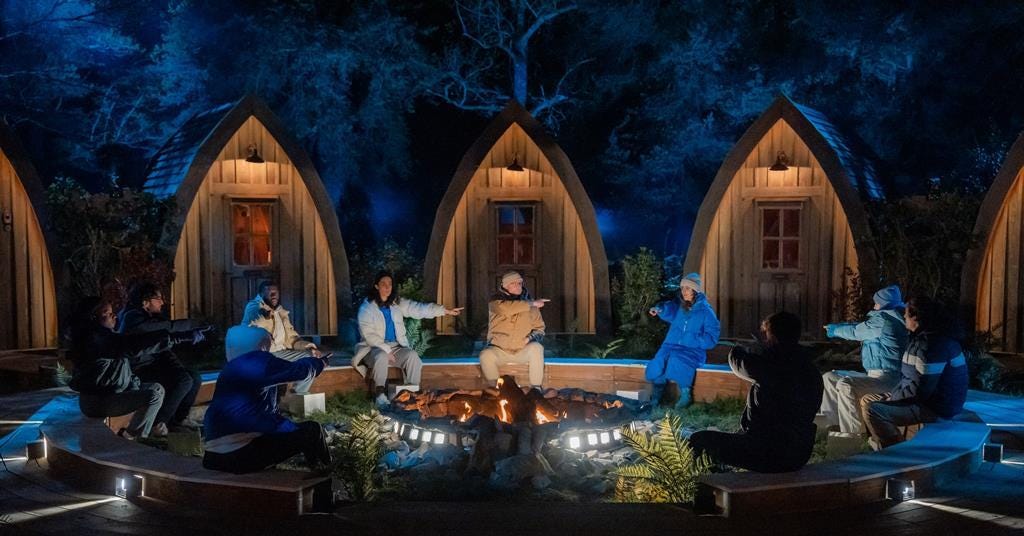
In short, the show is a close cousin to The Traitors (which, in turn, is based on the same social deduction mechanics), just with Werewolves instead of Traitors. For 13 days, in a remote village deep in the forest, 13 players—the Villagers—compete for a cash prize. However, hidden among them are the Wolves: a secret group intent on eliminating the other players one by one to claim the jackpot. The villagers must rely entirely on deduction to uncover these hidden threats. Each night, the wolves secretly choose a victim, while during the day, the villagers vote to banish someone in the hope of unmasking a wolf. Will the Villagers manage to eliminate the threat in time?
The format fits perfectly into the well-proven trend of ‘psycho-formats’ (see our report 10+1 Global Formats Trends), currently one of the most dominant genres in the market. But in this case, the most compelling takeaway is the tightening web of alliances between Disney+ and linear networks. While public and commercial broadcasters were once the streamers’ main rivals, they are now becoming valuable allies in a broader counter-YouTube strategy—the real enemy for everyone ;)
GERMAN BAD BOYFRIENDS
In the new, hyper-fragmented media landscape, dating shows and romance-focused formats remain a bulletproof certainty. For some time now, however, alongside “classic” dating setups—where a single seeks a partner from a pool of suitors—several variations on the theme have emerged. It’s a trend we have dubbed ‘Love Beyond Boundaries’ (see our report, 10+1 Global Format Trends: request your free copy in the comments). One of the most compelling examples of this evolution is Optomen’s reality format, Bad Boyfriends, which originally launched on ITV2 and ITVX in the UK.
The latest industry news is that German streaming platform RTL+ is launching the format’s first international adaptation, under the local title Bad Boyfriends – Jetzt Wird Abgerechnet (literally: Now is the time for reckoning). Produced by Filmpool Entertainment, the 10-episode series will drop in double weekly installments over a five-week run, starting June 30, 2026.
The concept is brilliantly simple: eight men get the surprise of their lives. Lured to Tenerife under the pretense of filming a wild, sun-soaked bachelors’ reality show called “Bro Island,” they think they are entering a paradise of luxury villas and endless parties. But “Bro Island” doesn’t exist. The twist hits right after the first party: the men are blindsided by their actual girlfriends, who signed them up to face a ruthless relationship reckoning after growing exhausted by empty promises, ego trips, controlling behavior, jealousy, and chronic immaturity.
While the women take over the luxury villa, the “bad boyfriends” are downgraded to a lackluster “Bro-Zone” trailer camp. Hosted by Charlotte Engelhardt and Calvin Kleinen (pictured), the show puts communication, trust, loyalty, and honesty to the test through rigorous relationship bootcamps and uncomfortable confrontations. Ultimately, the series poses the ultimate question: who will seize the opportunity to change, and who will fall right back into old patterns?
In this case, the narrative focus completely shifts from finding a new partner to consolidating an existing relationship. By raising the stakes for real-life couples, the format unlocks a significantly richer, more unpredictable story arc.

FINNISH FEAR
The third trend covered in today’s issue is the Reboot. Although down slightly compared to last year, it remains one of the most resilient trends in an era where everyone is far too risk-averse. In this case, we’re talking about one of the all-time TV classics, Fear Factor, which introduces our third ‘dark side’: fear, of course.
The iconic competition show premiered on NBC in 2001, but it is not originally an American format. It is actually based on the Dutch show Now or Neverland, created back in 1998 by Endemol for the now-defunct channel Veronica (which, incidentally, also aired the very first edition of Big Brother).
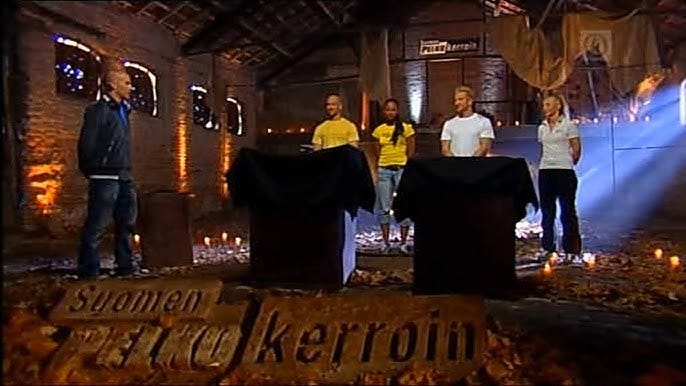
And now, after nearly 30 years of history and adaptations across 32 different countries, the format is making a comeback in Finland after a 17-year hiatus. Commissioned by Nelonen Media’s streamer Ruutu, this new local version—titled Pelkokerroin and produced by Banijay Finland—marks the format’s latest international revival.
Inspired by Endemol Shine North America’s recent version—the ratings hit Fear Factor: House of Fear, which has been confirmed for a second season on FOX—this reimagining introduces a high-stakes social experiment. Alongside confronting intense physical trials, contestants will live together under one roof, navigating shifting alliances, mind games, and mounting social pressure. In an environment where trust is fragile, fear itself becomes a powerful strategy. In the end, only one contestant will conquer their fears and walk away with €20,000.
Great respect for a true TV classic, but a few more original formats definitely wouldn’t hurt the industry...
NEWS IN A NUTSHELL
Bell Media-owned Canadian streaming service Crave has ordered a French-language adaptation of NBCUniversal-owned US comedy competition format House of Villains. The Quebecois edition, titled La Maison Des Vilains, is being produced by Montreal-based Productions J in collaboration with Bell Media. Filming is currently underway and the first episodes are set to debut on Crave on August 19.
Prime Video has pulled back the curtain on the reality dating series Undercover Lover, which will be available on the global streamer later this summer.
The show sees five couples taken to South Africa and separated from their partners. One of each pair then poses as single in an attempt to win €50,000, surrounded by attractive singles whose only mission is to expose them, all while their partners watch from a second villa. The series hails from Netherlands-based, Banijay Entertainment-owned label SimpelZodiak.
Brazilian free-to-air broadcaster TV Globo is set to adapt BBC Studios’ hit format The Weakest Link, which will air as a segment within Em Família, the new Sunday afternoon variety show hosted by Eliana. The news was first reported by local newspaper Folha de S.Paulo, citing a commercial trade document sent to the advertising market on Monday the 16th.
Globo has also secured the rights to adapt Banijay’s format Upside Down—which originally premiered in 2023 on the Dutch platform Videoland—similarly featuring it as a segment on Eliana’s Sunday program.
Chilevisión prepares Fiebre de Canto (Singing Fever), a new prime-time entertainment show that will expand the Fiebre de Baile (Dancing Fever) IP, one of the channel’s most successful properties. The format will also be hosted by Diana Bolocco and will bring together a group of celebrities looking to discover and develop their vocal skills throughout the competition. The network teased that details regarding the cast and premiere date will be revealed soon.
The hit Spanish true-crime podcast Criminopatía, hosted by Clara Tiscar, is set to be adapted into a documentary series by Netflix and You First Originals, the production arm of You First by Gersh. Production is already underway and will tackle some of the most harrowing cases in recent Spanish history, going “beyond the mystery” to explore violence, justice, and human behavior from a deep social and psychological perspective.

Great rundown Axel! I agree, a few new formats would be helpful.